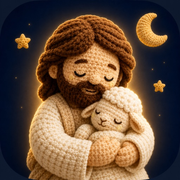
 Tiny Psalms
Psalm 4:8 — 'I will both lay me down in peace, and sleep: for thou, LORD, only makest me dwell in safety' — is the Bible's own goodnight verse. David wrote it on a hard day, not an easy one, and it makes falling asleep an act of trust: I can stop watching, because God doesn't. In kid words: 'I can close my eyes, because God keeps me safe all night.' Said nightly, it turns lights-out from the scary part of the day into the trusting part.
| Verse | Psalm 4:8 — the last verse of an evening psalm |
|---|---|
| KJV text | “I will both lay me down in peace, and sleep: for thou, LORD, only makest me dwell in safety.” |
| In kid words | I can close my eyes, because God keeps me safe all night. |
| Good for | the fixed goodnight verse; worry at lights-out |
“I will both lay me down in peace, and sleep: for thou, LORD, only makest me dwell in safety.”Psalm 4:8 (KJV)
Written on a bad day
Psalm 4 is an evening psalm, and it wasn't written by someone whose day went well — David is surrounded by people speaking against him, and verse 1 opens with him calling out in distress. That matters: verse 8 isn't the sigh of a man with no problems; it's a decision made with problems still unsolved. He lies down before the situation is fixed, because his safety never depended on the situation. That's exactly the skill we want bedtime to teach a child: the day doesn't have to be finished, fixed, or perfect for sleep to be safe.
The logic a child can hold
The verse has a beautiful, simple logic: I sleep because the LORD keeps watch. Only one of us needs to stay awake, and it isn't me. Children carry the night shift so instinctively — listening for sounds, keeping an eye on the door — and this verse formally takes them off duty. Kid words: “God stays awake all night, so you don't have to. Your only job is to sleep.” Its sister verse, Psalm 121:4 (“he that keepeth Israel shall neither slumber nor sleep”), makes the same trade — more on Psalm 121 here.
Using it as the fixed goodnight verse
- Same words, every night, last thing. After the story and prayer, lights low: “I will both lay me down in peace, and sleep — goodnight.” Repetition turns it into the body's own off-switch.
- Personalize it: “Oscar can lie down in peace and sleep, because You, Lord, keep Oscar safe.” The psalm is first-person on purpose.
- Act it out: say “lay me down” as the head hits the pillow. Little bodies remember what they perform.
- On a worried night, lead with the second half: “You, Lord — only You — keep us safe.” The word only quietly removes the child from the job.
A Psalm 4:8 goodnight prayer
Dear God, the day is done and we're giving it to You — the good parts and the hard parts. Now [name] will lie down in peace and sleep, because You alone keep [name] safe. Goodnight, Father. In Jesus' name, Amen.
For the full two-minute prayer frame this fits inside, see how to pray with your child at bedtime.
A story made just for your child tonight
Psalm 4:8 is woven through Tiny Psalms — many stories end their promises with it. Hear it inside a story made for your child, with their name and tonight's worry gently answered. First story free.
Frequently asked questions
What does Psalm 4:8 mean?
Falling asleep is an act of trust: David lies down and sleeps — both, at once, untroubled — because safety comes from the LORD alone, not from his circumstances being fixed first.
Why does it say 'I will BOTH lay me down in peace, and sleep'?
The 'both…and' means the two happen together: he doesn't just get into bed and then lie awake worrying — he lies down and sleep actually comes, because peace came first. Many parents recognize the difference.
Is Psalm 4:8 good for kids to memorize?
It's one of the best first memory verses: short, rhythmic, about a moment they live every night, and useful for life. Say it at lights-out for a week and most children have it for good.
What's the difference between Psalm 4:8 and Psalm 121?
They're two halves of one comfort: Psalm 4:8 is the child's side ("I can sleep") and Psalm 121 is God's side ("He never sleeps"). Together: only one of us needs to stay awake tonight, and it isn't you. Learn more.